
Fermented Swicy Sauce
Swicy Sauce is a flavor profile that combines sweet elements like honey, maple syrup, or fruit with heat from chili peppers. What makes our version different is that we bring on a third element, to heighten your experience:
SWEET (e.g. Maple Syrup) + SPICY (e.g. Hot Chili Peppers) + UMAMI (Chili Pepper Paste preserved using traditional wild fermentation).
Kres Kitchen Wildfire Hot Chili Paste is traditionally fermented and aged without added water, vinegar, rice or soy to create full-bodied flavors with layered complexity and a unique capsaicin adventure. Where vinegar-based sauces create a sharp, immediate burn, the heat level of fermented paste is perceived as richly integrated for a more balanced experience.
The sweet + spicy combo has existed for centuries in global cuisines but the attributes of ancestral lactofermentation in a Hot Pepper Paste delivers differently on flavor, heat and bio-nutrients - all influenced by live active cultures.
Video instructions for making personalized Swicy Sauce; combines the sweet elements of maple syrup, the stinging heat from chili peppers and the tangy zest of wild fermentation.
How to Make Fermented Swicy Sauce
To make a balanced “swicy" sauce with a nice kick, the ideal ratio for most palates is 9 parts sweetener to 1 part hot pepper paste. An easy way to think about the 9 to 1 ratio: 3 tablespoons sweetener + 1 teaspoon hot pepper paste. We taste tested this ratio at multiple farmers markets and it seemed to hit perfectly.
Because Wildfire is thick and concentrated, you need less. If you were making swicy sauce with traditional liquid hot sauce, use a ratio of 2-3:1, or 2 to 3 tablespoons of sweetener to 1 tablespoon hot sauce. Adjust the ingredients more/less until you find what matches your individual preferences.
This versatile sauce tastes equally delicious with maple syrup or honey. I haven’t tried mixing with fruit… except tomatoes. I can assure you that using swicy in a Bloody Mary or a Bloody Mary mocktail is outta this world! Many store-bought Bloody Mary mixes contain added sugar, often listed as high fructose corn syrup - skip the fake stuff and make it with real ingredients.
More on Flavor and the Fermented Experience
When you prepare a Swicy Sauce with fermented chili paste, it brings out more than just heat; your initial taste sensation is sweet followed by a cascade of glorious experiences.
How it Plays out: Sweetness is perceived immediately, whereas the heat from spicy foods often intensifies over several seconds to minutes. The sweetness enhances your ability to taste the subtle floral, fruity, aromatic and herbaceous flavors in the chili peppers along with the garlic and ginger in the paste. Because the attributes of the fermentation process and the complex structure of maple syrup interact, your taste buds perceive the flavors in this specific order:
1. The Immediate Sweetness (Maple Syrup)
The Sensation: As soon as the sauce hits your tongue, the simple sugars in the maple syrup bind to your T1R2 + T1R3 sweet receptors.
Why it's first: Maple syrup is highly soluble in saliva, allowing it to coat the tip of your tongue instantly. This initial "sweet hit" provides a protective layer that temporarily shields your pain receptors from the heat.
2. The Tangy Transition (Lactic Acid)
The Sensation: Shortly after the sweetness, you’ll notice a bright, tangy sourness.
The Science: This comes from the organic acids produced during the pepper paste’s fermentation. In a fermented sauce, this acidity acts as a bridge, cutting through the heavy maple sweetness and preparing your palate for the heat.
3. The Savory Depth (Umami & Aromatics)
The Sensation: You’ll experience a "tangy," savory depth that isn't present in fresh pepper sauces.
The Science: Fermentation breaks down the proteins in the peppers into amino acids (glutamates), creating umami. Meanwhile, the maple syrup contributes secondary notes of vanilla, caramel, and woodiness.
4. The "Tamed" Slow Burn (Capsaicin)
The Sensation: The heat arrives last, but it feels different. Instead of a sharp, stinging prickle, it’s a warm, radiating glow.
Why it's delayed and mellowed:
Inhibition: The lactate from the fermented paste physically inhibits your TRPV1 (heat) receptors, preventing them from firing as aggressively.
Binding: The sugar in the maple syrup helps bind to the capsaicin receptors, further mitigating the burning sensation and allowing the fruity flavors of the peppers, garlic and ginger in the paste to fully emerge.
Different Sweeteners, Different Swicy Experiences
Swapping maple syrup for honey in your fermented pepper sauce changes the timing, texture, and intensity of the swicy experience due to honey’s higher fructose content and unique physical properties.
1. Faster, More Intense Sweetness
The Science: Honey is primarily fructose, which is 1.2–1.8 times sweeter than the sucrose found in maple syrup.
The Experience: Fructose has a shorter “flavor” reaction time, meaning your brain registers the sweetness of honey faster than maple syrup. This creates a more dramatic "spike" of sweetness that hits the tip of your tongue almost the instant it touches your palate.
2. A "Coated" Palate (Texture)
The Science: Honey is more viscous and contains natural waxes and complex proteins.
The Experience: While maple syrup is thin and washes away quickly, honey creates a physical film over your taste buds. This lingering mouthfeel acts as a more effective buffer against heat, as the honey physically coats the TRPV1 (pain) receptors, slowing down the capsaicin’s ability to bind to them.
3. Floral vs. Woody Aromatics
Maple Syrup: Delivers earthy, caramel, and vanilla notes that complement the "zest" of fermentation.
Honey: Introduces floral and herbaceous notes.
4. The Heat "Buffer"
The Sensation: Because honey is sweeter and more "clinging" than maple syrup, the transition from sweet to heat feels more gradual.
The Science: The higher sugar concentration and density of honey can "moderate" the perceived heat more so than maple syrup, making it the preferred choice for those who want the flavor of chili peppers without an overwhelming burn.
Of course, by adjusting the amounts of chili paste and sweetener used, you can influence these experiences in the direction that suits you best. Ready to start experimenting? Let’s dip in.
RECIPE INGREDIENTS
1 TSP Kres Wildfire Hot Pepper Paste
3 TBSP of your favorite local maple syrup or honey (adjust to your spice preferences, more/less)
DIRECTIONS
Add all ingredients in a clean glass jar and shake, or whisk in a bowl
Taste the sauce. If it's too spicy, add another tablespoon of honey/syrup. If it's too sweet, add a dash more pepper paste.
Use Honey for a thicker, stickier sauce that clings well to grilled foods (applied after grilling), cooled pizza, or over ice cream.
Use Maple Syrup for a thinner, pourable glaze with woody, caramel undertones—ideal for dipping sauces, waffles/pancakes, roasted vegetables, salmon, cocktails and mocktails.
PRO TIP: If you want to preserve the benefits of fermentation, avoid heating as this will neutralize the beneficial microbes, metabolic enzymes and some key vitamins, especially Vitamin C. Fermented Hot Pepper Paste is best used in cool application or after your dish has been pulled out of the oven and cooled a bit (e.g. pizza).
Store in an airtight container in the refrigerator for up to 2 weeks.
OTHER SWICY SAUCE TWISTS TO CONSIDER:
Adjust portions to your taste preferences:
2 tbsp peanut butter for a creamy texture
1 clove garlic (minced), it’s so good for you!
1 TBSP apple cider vinegar for sharper sour (note: be careful if using Kres Wildfire, vinegar may harm the living microbes)
A dash of smoked paprika
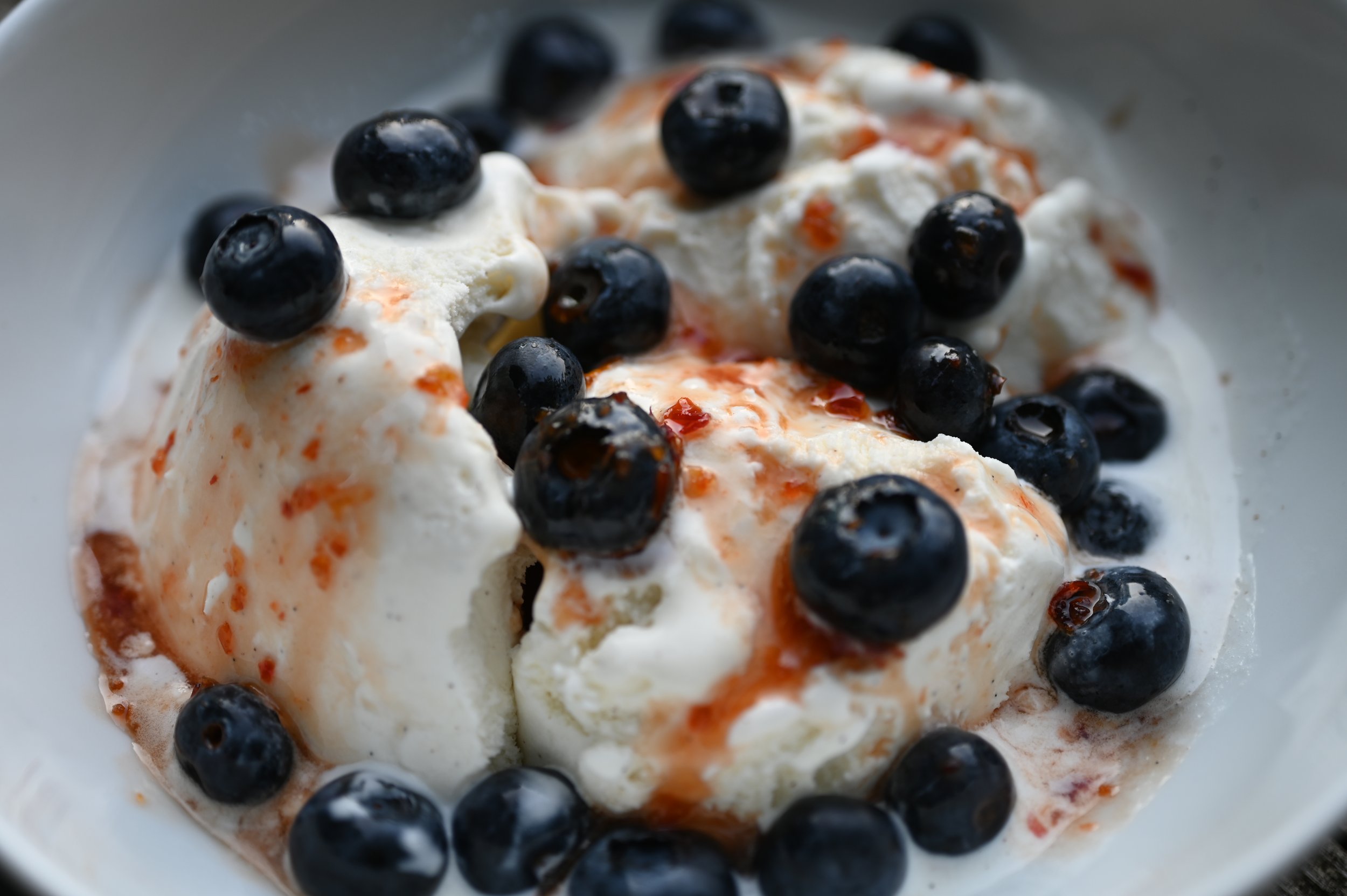
Ice cream topped with fresh blueberries and drizzled Swicy Sauce
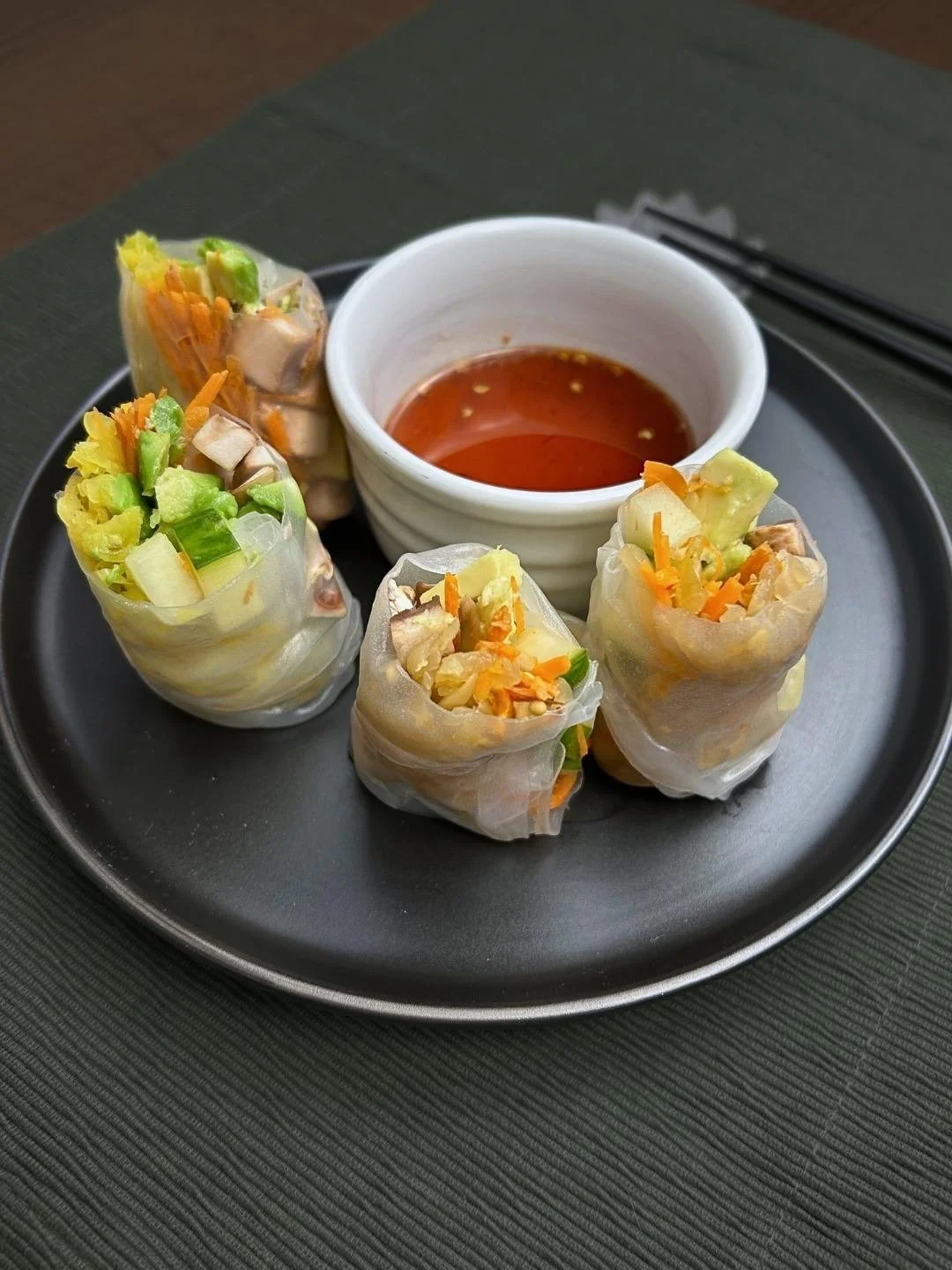
Swicy dipping sauce for homemade sauerkraut spring rolls. Click on the photo to go to this recipe.
More on Wildfire
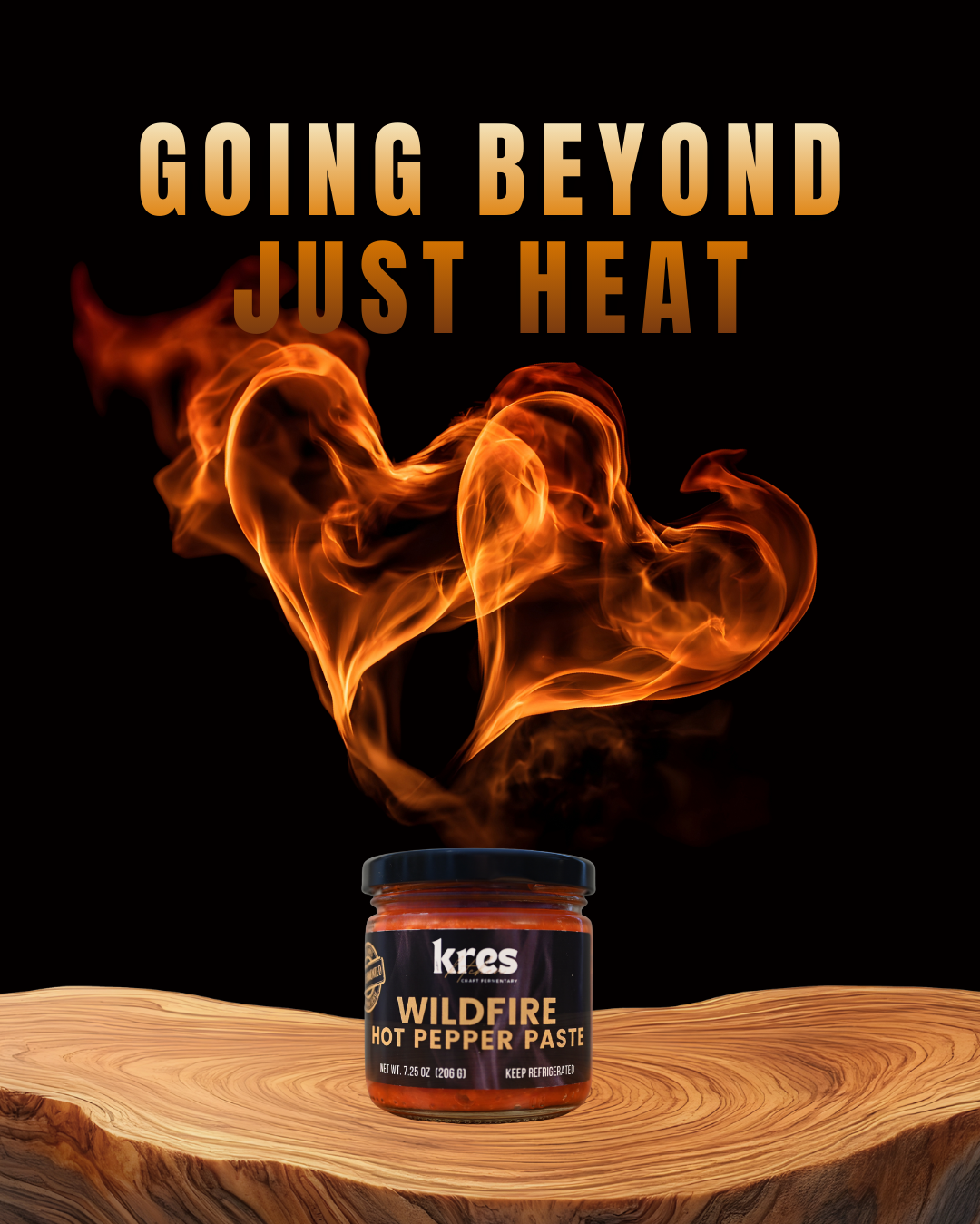
We're not here to follow trends—we're here to build something timeless. With a blend of creativity, wild inspiration, and a sense of place, we bring foods to life. Every ferment we take on is an opportunity to learn, grow, and create something meaningful. We treat ecology like a partner and our work like craft.
If you want to know more about Wildfire, we’re sharing.