Wild Fermented Sauerkraut: 5 Powerful Functional Benefits
Functional foods are dietary items that provide health benefits beyond what basic nutrition can do. Lactoferments, like sauerkraut, are good examples of functional foods. The resurgence of age-old fermentation techniques are taking a compelling aim at improving our wellbeing and reducing the risk of disease, using the untapped power of our own gut microbiome. If we pull this off, the success story may be revolutionary. A change that can be attributed to restoring our evolutionary relationship with beneficial microbes. Historically, fermented foods allowed for routine consumption and replenishment of beneficial gut microorganisms. Our modern diet lacks these inputs, but reintroducing them helps to restore our ancient microbial connections — along with the forgotten benefits these connections bring.

Nutritional Strategy Restoration
A term used to describe a type of strategic change where functional foods are reinterpreted and reinvigorated as abandoned techniques from our own history to solve modern-day health problems.
The scientific community, especially integrative medicine, is in the midst of a massive pursuit aimed at figuring out the interworking of our gut microbiome - a biological system so complex that we’re still uncovering new pathways to better health. Who are the key players? What do they do? What effect do they have on health? And is it worth isolating and cataloging newly identified species for potential individualized health interventions? The science is progressing, but the runway is steep and long, we can’t wait for all the answers. At Kres we’re keeping a close eye on the science while adopting a chapter from history - to become generalists in nurturing and promoting indigenous microbiology populations. We do this by nurturing our soil so that it serves as a dynamic reservoir for ecological diversity. A place where all beneficial microbes can be equitably included in our fermentation process depending on the plant, our terroir and the growing season - just like it has been done throughout history.
Wild fermented sauerkraut is considered a "natural functional food" because it contains diverse populations of live microorganisms and dietary metabolites that directly support metabolic and systemic health.
Five Reasons Wild Fermented Sauerkraut is a Powerful Functional Food
Boosts Gut Health (Probiotics): Regular consumption of wild fermented foods significantly boost the diversity of bacteria in the human gut, which help replenish and diversify the gut microbiome improving digestion, reducing inflammation and supporting the work of the resident microbial community.
Produces Postbiotic Metabolites: Fermentation produces thousands of healthful chemical byproducts. The most well-documented postbiotics and their role:
Short-Chain Fatty Acids (SCFAs): The primary byproducts of fiber fermentation. Short-chain fatty acids provide critical energy to the cells lining your colon while supporting gut barrier integrity (preventing leaky gut), reducing systemic inflammation, and regulating metabolic processes like blood sugar control and appetite.
Vitamins: Beneficial bacteria can synthesize essential nutrients, particularly B vitamins (like B12, folate, and riboflavin) and Vitamin K2.
Antimicrobial Peptides (AMPs): Natural antibiotics such as bacteriocins that suppress harmful pathogens while protecting beneficial microbes.
Neurotransmitters: Microbes produce signaling chemicals like GABA (gamma-aminobutyric acid), serotonin, and acetylcholine that communicate with the brain via the gut-brain axis. Serotonin acts as a key chemical messenger in the brain that stabilizes mood and emotions while coordinating essential functions like sleep cycles, appetite, and cognitive processes such as memory and learning.
Organic Acids: Compounds like lactic acid that help support health by optimizing digestive pH, inhibiting the growth of harmful pathogens, and serving as a direct energy source for cellular metabolism and tissue repair.
Exopolysaccharides (EPS): Carbohydrate polymers secreted by bacteria that have antioxidant, anti-inflammatory, and potentially anti-cancer properties.
Cell Wall Fragments: Structural components released when bacteria die (cell lysis), such as peptidoglycan, teichoic acids, and lipoteichoic acids, which stimulate immune system activity.
Creates Synbiotic Effects: Fermented foods act as both probiotic (adding new microbes) and prebiotic (feeding existing microbes), promoting metabolic health through beneficial compounds like short-chain fatty acids.
Improves Polyphenol Availability: Lacto-fermentation acts as a "biological factory" that converts complex plant polyphenols into smaller, more active, and more absorbable forms. Here is how the sauerkraut fermentation process optimizes polyphenols in our diet:
Releases "Bound" Polyphenols: In raw plants, many polyphenols are physically "bound" to the cell walls (lignin and cellulose), making them difficult for our bodies to digest. Lactic acid bacteria (LAB) produce enzymes that break down the plant’s cellular structure. This releases the trapped polyphenols into a "free" form that is much easier for our intestines to absorb.
Removes Sugars: Most plant polyphenols are naturally attached to sugar molecules (glycosides), which lowers their biological activity. Gut bacteria secrete an enzyme that snip off these sugar units. This creates aglycones — the "pure" form of the polyphenol with significantly higher antioxidant and anti-inflammatory power than the original sugar-bound versions.
Biotransformation into New Metabolites: Lacto-fermentation doesn't just unlock existing compounds; it often creates entirely new ones that don’t exist in the raw foods you’re eating. For example, fermentation can turn the mouth-puckering astringency of raw aronia berries into the complex, "delicious" flavors found in the fermented version. Beyond flavor, this biotransformation significantly improves the bioavailability of aronia’s abundant polyphenols. While raw aronia polyphenols are often too large to be absorbed raw (less than 1% absorption), fermentation increases absorption by 10-fold. In short, fermentation transforms aronia from a high-antioxidant fruit that your body largely "ignores" into a highly bioavailable source of anti-inflammatory and metabolic health benefits.
Provides Essential Vitamins like K2 (Menaquinone): Fermentation increases vitamin levels. For example, K2 levels (converted from K1), is an essential vitamin for cardiovascular health and calcium metabolism, a benefit largely absent in raw unfermented cabbage. Unlike Vitamin K1, which is found in leafy greens and primarily helps with blood clotting, K2 focuses on calcium metabolism. The two main types of vitamin K2 are MK-4 (found in animal products) and MK-7 (found in fermented foods). K2 is important because it supports cardiovascular health, bone density, and potentially brain function. Sauerkraut is a key source of dietary Vitamin K2.
The Wild Advantage
The fermented food industry is going through a shift from solely focusing on "specific strains" of probiotics (pharmaceutical-style model), to looking at the effects of a "consortium" of diverse microbes (holistic model). Interestingly, only 10%–25% of our gut microbes have been scientifically cultured and named. Large-scale sequencing projects continue to identify new species, indicating that the total, fully characterized, and named catalog of gut microbes is still in its early stages. There’s so much we don’t know. In part, this is because the majority of gut bacteria are strict anaerobes (thrive in no oxygen environments), making it difficult to grow these players in traditional laboratory settings, and leading to a number of "unculturable" species. It’s also important to note, while a "core" microbiome exists in us all, a large percentage (up to two-thirds) of your individual gut bacteria can be specific to YOU, which makes comprehensive, universal identification and alignment more challenging. Despite this, I’m exceedingly optimistic about progress within the scientific community. Individualized nutrition is shifting from generalized advice toward precision microbiome analysis, utilizing AI-driven data and functional testing to tailor dietary interventions based on a person’s unique microbial composition and real-time metabolic responses. Great news for those suffering from chronic disease.
For most people though, fermented foods are an excellent way to take better control of your health - right now. Building diversity, boosting therapeutic metabolites, and keeping gut microbes happy, well-fed… and working. The wild approach that we advocate is supported by current research — a high-diversity "community" of microbes is often more resilient and beneficial than a massive dose of a single strain.
The Resiliency of Wild Fermentation:
Synergies: Wild fermented sauerkraut contains dozens of unique species that thrive on working together in “ functional teams”. Single strains (like those found in commercial cultures) may not be as effective because “the integrated system” is not supported and doesn’t really exist.
Ecological Niche: A broad spectrum of wild microbes are more apt to find a niche, or a missing link, in your unique gut environment than a single isolated strain.
Food Matrix: The fiber and nutrients in wild sauerkraut are specifically tailored to the consortia of microbes that exist there. This coherence helps to nurture and safely usher living communities through your digestive system, “reducing risks, opening doors, paving the way and introducing them to resident microbiota”. Sounds good, huh?
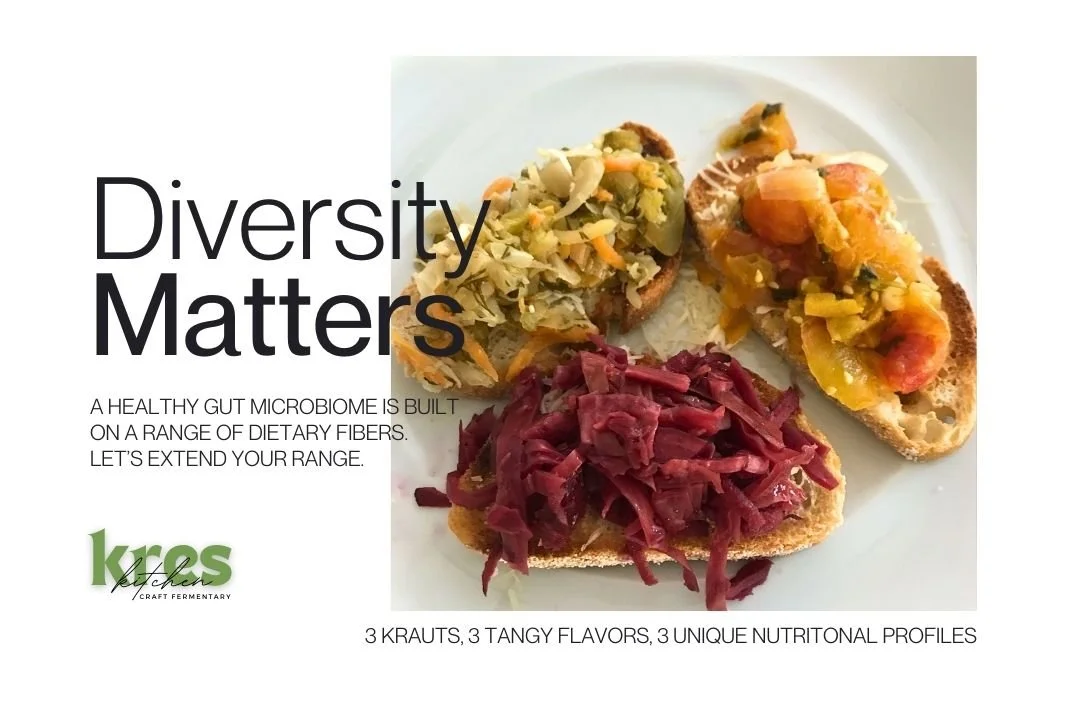
Research shows that the microbiome of people living in the industrialized world is often depleted of fiber-degrading microbes. This means no SCFA for you! We can fix this.
Consumption of diverse dietary fiber + diverse living microbiota may improve overall gut health and immune function. This is the way.
Sauerkraut as a Functional Food - Key Concepts Revisited
Wild fermented sauerkrauts are inherently synbiotic because they contain both diverse live cultures and the original fiber from the plant source. In functional nutrition, a synbiotic intervention is the therapeutic use of a combined mixture of probiotics (live beneficial microbes) and prebiotics (selective foods for the microbes) to produce a synergistic health benefit for you, the host.
This approach is fundamentally different from taking probiotics or prebiotics alone because sauerkraut fermentation ensures the beneficial bacteria have their preferred "fuel" to survive and support colonization of the gastrointestinal tract.
This sauerkraut combination of both live cultures and original fiber from the plant-based ingredients makes it easy for anyone to incorporate the principles of synbiotics into their dietary routine. Doing so can help achieve the following physiological outcomes:
Microbiome Resupply: Restoring beneficial bacterial populations (like Lactobacillusand Bifidobacterium) after they have been disrupted by illness or antibiotics.
Metabolic Restoration: Improving glucose-insulin balance, reducing systemic inflammation, and supporting healthy metabolism.
Intestinal Barrier Support: Enhancing the integrity of the gut lining to prevent bacterial translocation (leaky gut) and to modulate the immune system.
Symptom Management: Addressing specific gastrointestinal conditions such as Irritable Bowel Syndrome (IBS) or chronic constipation.
Always check with your healthcare provider if you have questions about how fermented foods may impact your individual condition.
For the rest of us… let’s give fermetned foods a solid place in our diet, and KRAUT ON!
Kres Kitchen provides general educational information as a public service which should not be construed as professional or medical advice. Please refer to our complete Terms of Agreement.
© 2025-2026 Kres Kitchen LLC. All rights reserved.